
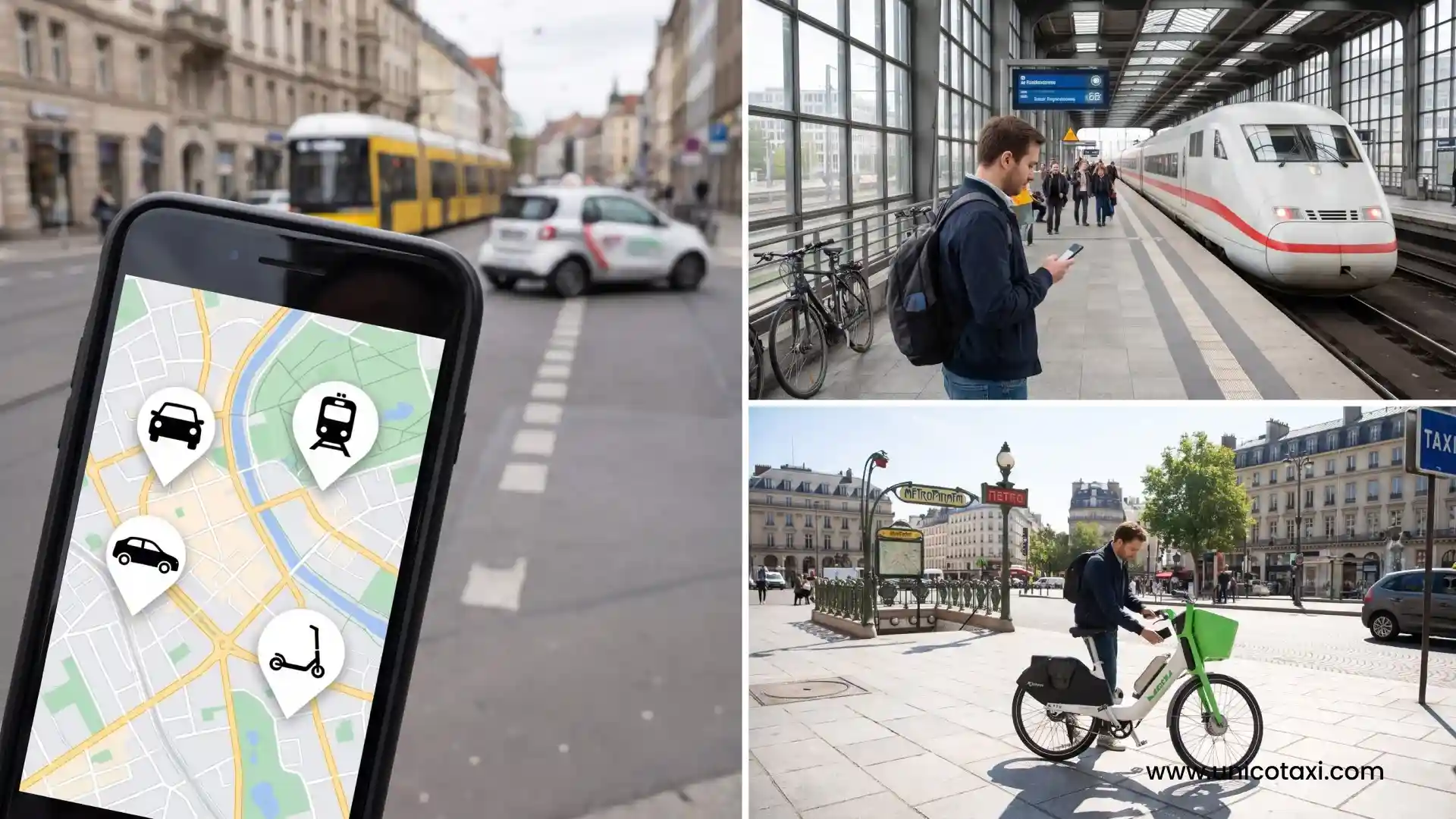

In 2016, a small company from Finland named MaaS Global introduced an app called Whim, making a rather unusual claim at that time: rather than owning a car, users could subscribe to the act of moving. With just one app and a single payment, a resident would be able to book a taxi, get on a tram, take a rented bicycle, or catch a train all without having to open four separate apps or search for four different tickets. The idea sounded almost too simple to be significant, typical of concepts that are dismissed in a presentation as being too obvious. A decade on, it has become the model that all the major European mobility platforms are quietly imitating, regardless of whether they acknowledge Helsinki’s role in coming up with it.
That exactly sums up the current state of multi-modal mobility in Europe: it’s not the case that a single company has emerged as the winner, but rather the whole continent is gradually coming to the view that travelling around a city should not require you to juggle a pocket full of different apps if you want to get from a train station to a dinner reservation in another part of town.
Why Europe Became the Place This Idea Actually Took Root?
Here, there were some features that were different from the situation in other places. Since European cities are dense, easy to walk around, and already have a well-developed public transport system, a mobility app had no need to persuade people that taking trains or trams was a reasonable choice since people had already been using them every day. Finland also enacted real forward-thinking legislation, the Act on Transport Services, which required transport operators to make their booking and payment systems available so that other platforms could actually connect to them. It would have been impossible for an app such as Whim to have combined taxis, buses, trains and bike-sharing services into a single checkout process in the absence of that law. This type of integration also shows how a taxi booking system can become part of a wider mobility ecosystem rather than operating as an isolated service.
The large-scale mobility as a service market is supported by actual figures. It is estimated by analysts that the global MaaS market will be worth about $350 billion in 2025 and is expected to rise above $1.18 trillion by 2035. This is no longer just a small-scale experiment, but a sector advancing at a truly fast rate, one that is now attracting considerable investment from transport operators, something that would have been considered other people’s problem to deal with a decade ago.
The Honest Part of This Story: It Hasn’t Been Easy
This is where things become more interesting than a simple tale of success. The app Whim, which is believed to have started all of this, underwent a financial restructuring in 2023. Instead of remaining a direct subscription service for regular users, the company changed course and began licensing its core technology to cities and transit authorities, so that it became the background engine powering other people’s mobility platforms rather than the brand that faced consumers directly. It serves as a reminder that even the concept that initiated this entire movement had to change and adapt if it was to survive in the long term.
The fact highlighted here is significant: it turned out to be more valuable to develop the technology that combines rides, trains, and micromobility into a smooth, unified booking process than it was to aim at becoming the single app that every rider downloads. Cities and bigger transport networks wanted the ability to integrate services, not necessarily another new app icon to compete with the other programmes on a crowded home screen.
What AI Actually Does Inside These Platforms?
Putting a taxi booking software platform together with train schedules and bike-sharing services may seem straightforward, but each system works according to its own schedules, pricing rules, and real-time availability data. All of these systems work according to their own schedules, their individual pricing rules, and their separate real-time availability data. That’s where AI proves its value, not as a flashy addition, but as the unobtrusive coordinator that quickly makes sense of all that scattered information so that the rider is given one clear answer: here is your best route, here is the price, here is your ticket everything decided in the time it takes to look at a phone screen.
AI models examine current traffic conditions, train delays, and the number of bikes or scooters available nearby, and then suggest the quickest or most inexpensive option for a particular journey, occasionally recommending a taxi for the first part and a tram for the rest instead of requiring the user to book each section individually and hope that the times match up. When this is done properly, it eliminates the mental calculations that riders had to make on their own, such as checking one app for a train, another for a ride, and simply guessing whether they would manage to connect in time before a meeting or a flight.
Also Read: Uber For Truck Clone App: 5 Ways to Revolutionize Freight Hauling
Why This Matters Beyond Big European Capitals?
It’s tempting to consider that this issue only affects cities such as Helsinki, Vienna, or Antwerp cities that have already launched a pilot version of this model. But the fundamental concept- that is, having a single platform that intelligently combines various modes of transport rather than requiring users to switch between several apps- is just as applicable to a medium-sized city or a regional operator who had never intended to develop a train-integration feature from scratch.
A local operator in the field of ride-hailing or taxis does not have to copy a full-scale national MaaS platform to benefit from this approach. For these operators, cloud-based taxi dispatch software can provide a flexible foundation for managing their services as their needs grow. A more basic version, such as a ride-hailing app that intelligently encourages passengers to choose a shorter taxi journey combined with public transport during a particular rush hour, still provides some of the same benefits: reduced friction, smarter routing, and a user who believes the app is actually considering their entire trip and not just the part it directly manages. For smaller operators, software for taxi companies can increasingly support more connected booking, routing, and fleet-management experiences without requiring them to build an entire mobility platform from scratch.
How UnicoTaxi Fits Into This?
This is exactly the kind of approach on which UnicoTaxi was based from the very beginning: rather than aiming to offer all kinds of services at once, it provides operators with Taxi Management software that is flexible enough for them to expand beyond being just a single-service ride-hailing app over time. Both the passenger app, the driver app, and the dispatch system operate under the operator’s own brand, and as demand changes whether that involves adding delivery services, introducing pooling, or later on some sort of multi-modal booking the same underlying system can adapt instead of having to start from scratch each time a new idea gains traction in the market. This flexibility allows a taxi dispatch solution to support operators as they introduce new services or adapt to changing mobility requirements.
For a taxi or ride-hailing company looking at the way Europe’s mobility platforms are developing, the takeaway isn’t simply that it should build a train integration feature tomorrow. Rather, it is that passengers nowadays expect their transport app to be a bit smarter when it comes to planning their entire journey, not just the part of the journey that the app itself manages, and if a platform is designed with that sort of flexibility in mind, the operator will be in a far better position to adjust to the changing expectations year upon year.
Final Thoughts”
The fact that Europe’s move towards multi-modal mobility wasn’t due to a single company getting every aspect right from the start is clearly shown by Whim’s own financial restructuring. Rather, the shift took place because a sufficient number of cities, regulators, and users believed that it was worthwhile to build a single intelligent transport platform, even though the business model had to be altered during the process if it was to remain viable.
The important lesson for operators everywhere, not just those in Europe, is not so much about copying a particular app as it is about the direction in which passengers are clearly moving they are heading towards using fewer apps, relying on smarter routing, and having transport platforms treat a journey as a single, connected trip rather than as a series of individual bookings. For operators, flexible taxi management software can provide the foundation needed to adapt as mobility services and customer expectations continue to evolve.
If you’re looking to create a platform that’s flexible enough to keep up with the way your riders really do want to travel, why not arrange a free consultation and live demo with UnicoTaxi?
Frequently Asked Questions:
- What does ‘multi-modal mobility’ actually amount to in practice?
What this involves is using a single app to plan, book, and pay for the entire journey by combining different modes of transport such as taxis, trains, buses, and bike-sharing services, rather than having to use a separate app for each section of the trip.
- Why did Whim, which was one of the earliest multi-modal apps, reorganise its finances?
Whim decided that it was more sustainable to license its integration technology to cities and transit authorities than to operate as a direct-to-consumer subscription service, changing its business model while still retaining the original idea.
- Do smaller cities or regional operators really need multi-modal integration?
It doesn’t have to be a complete version of it; for example, a simpler method such as a ride-hailing service that smartly recommends combining a short taxi journey with public transportation achieves most of the same advantage without the need to create an entire national platform.
- In what way does AI actually assist in combining different modes of transport into a single booking?
The AI looks at live data from all modes of transport, including traffic conditions, train schedules, and the availability of bicycles, before suggesting the quickest or most efficient option for a particular journey, eliminating the manual guesswork that riders had previously had to do themselves.
- Does UnicoTaxi provide multi-modal booking as Whim does?
The main strength of UnicoTaxi is its ride-hailing, dispatch, and fleet management system under its own brand, which is flexible enough to allow it to expand into other services in the future as the operator’s needs and riders’ expectations change.